

How photography decides which stories fashion will tell
Almost everyone has feared the dark. As children, the inability to see what surrounds us leads us into a place of not-knowing – not perceiving, not understanding, not recognizing. We become lost in everything we cannot define, locate or grasp. And in those moments, throughout our entire lives, light has always arrived. Illuminating, clarifying, offering the promised transparency that shadows take from us, light appears as a guardian of the safe truth. Under it, everything feels firm, fixed, clear, simple. Yet, just as in darkness, it all sums up to a single thing – what we are allowed to see.
In fashion, light is never just illumination. Far beyond exposing and coloring fabrics and models, light becomes authorship, argument, ideology. Whoever controls the light determines not only what is seen, but what deserves to be seen, and how it will be shown. Whoever holds the light holds the narrative. Whoever holds the camera, holds the truth that fits within the chosen frame.
In editorial photography, lighting becomes a narrative gesture that increasingly learns to write stories through different lines. For decades, the studio was a temple of luminous perfection, where shadows slimmed faces, soft light erased textures, and reflectors crowned models as untouchable icons. But no one writes in the same way, and no one interprets the same story – and a new generation of photographers has begun to treat light not as a veil that hides imperfections but as an instrument that reveals what one chooses, or even what once remained concealed.
Light that rewrites the view
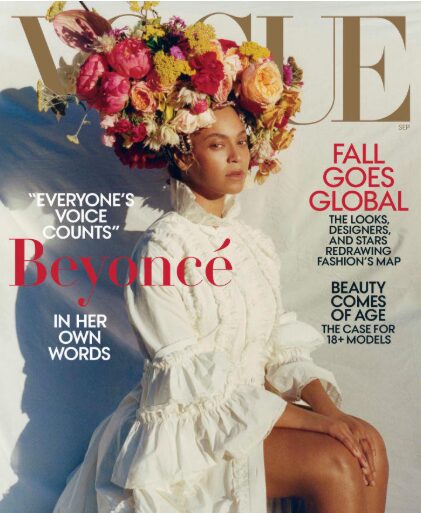
That is what Tyler Mitchell did in 2018, when he became the first black photographer to shoot Vogue US’ September cover, portraying Beyoncé under warm, abundant natural light, symbolized by the sun she carries above her head. Inspired by the visual culture of the American South, Mitchell rejected decades of underexposure of black skin in fashion photography, using sunlight and flashlights as beauty and reclamation – a way of affirming that these bodies deserve to be seen in full luminosity. A political act written into the camera’s very aperture.
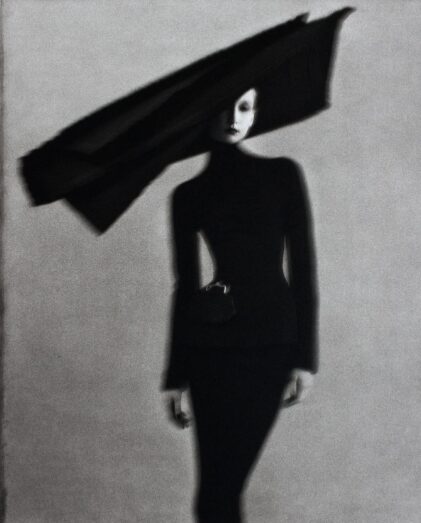
New stories are told, and told differently. Defying the cold idea that light must delineate and reveal exact forms even back in the day, the photographer Sarah Moon fell in love with shadows and blurs, challenging the excessive and absolute clarity of the fashion gaze to create photographs verging on paintings.
In her Cacharel campaigns from the 1970s and in later exhibitions, models appear diffuse, almost ethereal, bringing forth a beauty that exists in what slips out of focus. Her penumbras question the tyranny of sharpness, offering a kind of sensitivity that opens room for mystery rather than control. If Tyler brings the sun, she knew how to bring the Moon – her very name guiding her toward the indirect light that ensnares shadows and nights.
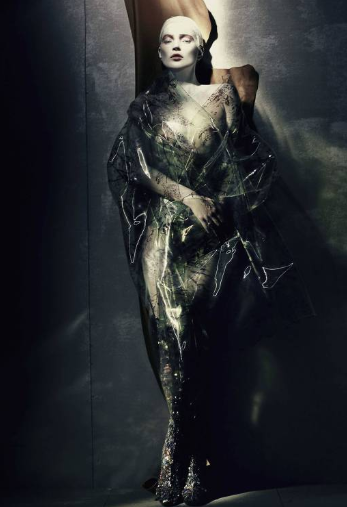
With time, the obsession with sharpness made room for an art no longer confined to the models and outfits, but expanding into the lens itself. Paolo Roversi, using long exposures in Vogue Paris editorials and Dior campaigns, transforms figures into translucent, almost spiritual beings. Rejecting the harsh, technical lighting of contemporary studios, he tells a story in which identity and style are too fluid to fit into correct illumination. In his clear aesthetic stance, beauty is not a fixed object to be displayed – is a state in permanent transformation.
Light reveals or hides what remains in its absence. It defines what may or may not be said and, above all, functions as a language. It explains the stories seen by those who control lenses, shutters, and apertures far beyond cold flashes, drawing lines between what is illuminated and what stays concealed. Fashion and its flashes may set trends, but photographers decide what glows, what disappears, and what is allowed to exist between the two. In the end, light remains power. And understanding who controls it, why and how, might end up being the first step towards truly understanding the stories fashion chooses to tell

About the Author
Marina Branco
Marina Branco est une étudiante brésilienne en journalisme et travaille comme journaliste sportive pour le portail A Tarde. En dehors du journalisme, elle travaille avec la géopolitique et les langues, développant des projets dans des écoles et à l’université. Elle fait partie de la présidence de la Ligue de Journalisme Sportif de l’UFBA. Marina écrit en tant que collaboratrice pour Blazé.e.s 2025/2026.